
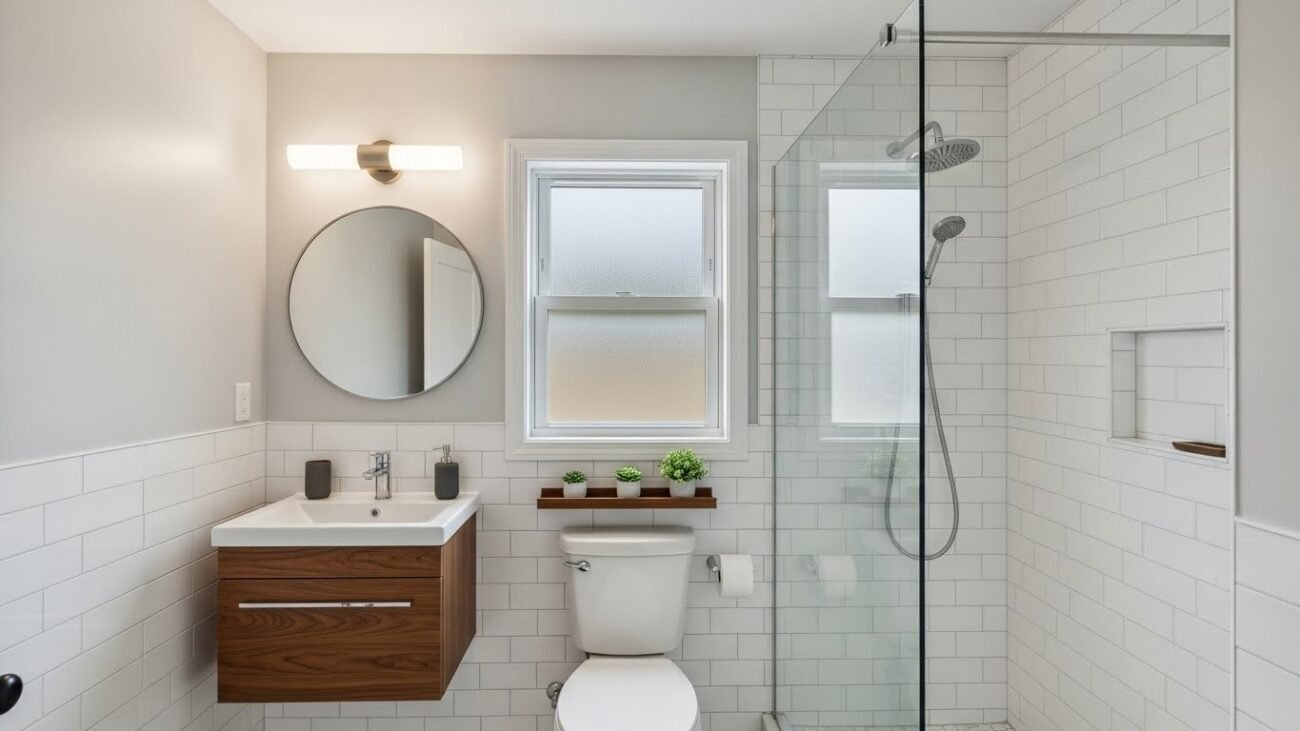
Introduction
Small Bathroom Ideas with Shower, Being a person who has been messing with home renovations since childhood, I can tell how it can be so difficult to make a tiny bathroom look both convenient and good to look at. I have personally renovated a couple of small apartments and one had a bathroom that was half the size of a closet. I needed to be ingenious with the shower then so as to escape that claustrophobic feel. In the current times when the cost of urban life is increasing and more people are forced to live in small areas, smart bathroom design is more topical than ever. Based on my personal projects and customer visits and following an observation of existing trends such as environmentally-friendly materials and technologies integrations, I have come up with this guide of 20 practical ideas on small-bathroom-with-a-shower.
It all hinges upon illusion and efficiency in the great small bathroom this is an idea of clever design that makes the space appear larger, water-saving eco-friendly fixtures, and offer designs with the accessibility of the user in mind. Not all of these ideas will be applicable to all homes, and I will indicate the advantages, disadvantages, and practical implementations as per what I have witnessed.
Construct in Storage-Integrated Shower Walls.

The minor bathrooms have storage as the Achilles heel, then why not incorporate it within the shower? Toiletry is stored in niche shelves or in-built caddies to ensure that they are out of sight. Recessed niches in a shower wall were proposed by me in a recent consult to a couple in the en suite, and it made the countertops look gorgeous. Advantages: Helps de-clutter the area and minimizes visual clutter. Limitations: It is most effective on new constructions or in the case of a big renovation since retrofitting may be hectic.
1. Have a Shower Enclosure at the corner.
The corner shower is one of my top recommendations when it comes to the small bathrooms. It can be fitted into a corner that is not in use and the remaining portion of the room can be used to store other necessities such as sink or storage. In a new project to a customer with a 5×7-foot bathroom in Brooklyn we fitted a frameless glass corner enclosure having a 36-inch square bottom. The result? It was light and contemporary without dominating the picture. Advantages: Utilizes the most of the awkward spaces and the layout is open. Disadvantages: May need to do some custom measurements, which may increase the price. In case of budget, go with prebuilt units so that it is simple.
2. Choose Walk-In Shower that has Clear Glass Doors.
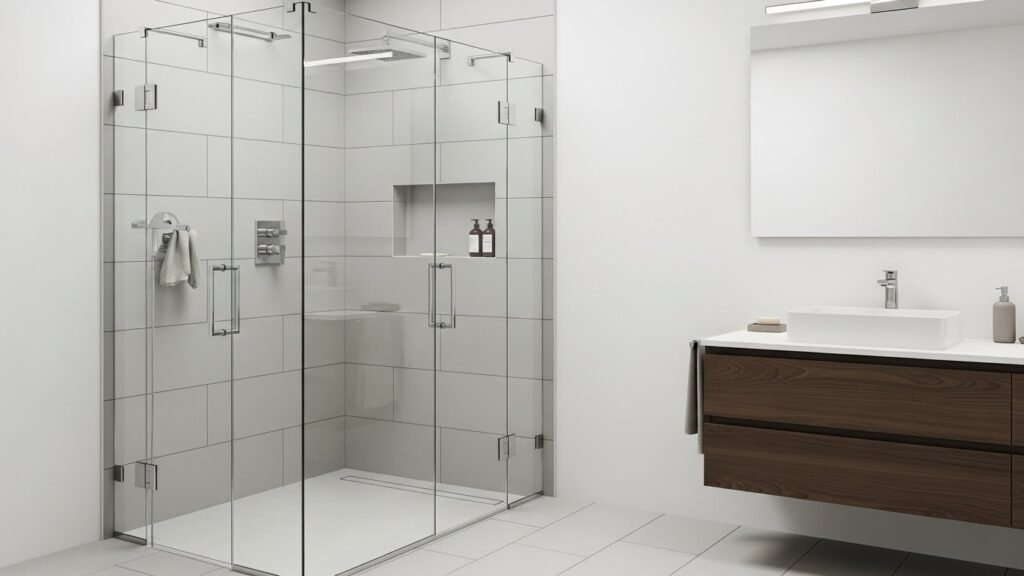
Small spaces Walk-in showers are a revolution in a small room, particularly when you can afford to leave out the bulky curtain in favor of clear glass doors. I recall a friend I was shopping with regarding the reno of her condo; we decided on a basic walk-in with floors to ceiling glass and this immediately made her 6×6-foot bathroom appear much larger. It is a trick of low-profile drains and smooth tiling to carry on that spa-like flow. Trends relating to it: Use it with a rainfall showerhead to make it luxurious. Disadvantage: They may be slippery to the elderly and in this case, it is best to ensure that you have the non-slip mats or grips to be on the safe side. Ethically, seek tempered glass that would be lasting and less harmful to the environment.
3. Fit an Alcove Shower to Easy Simplicity.
The Alcove showers are installed between 3 walls and therefore it is a good shower that fits in the super-compact bathrooms. When I was in the early apartment days, I replaced a large bathtub with a 32-inch alcove and it made the room look different. The modern ones are usually equipped with inbuilt shelves that hold the shampoo, thus reducing clutter. Advantages: simple to install, and can be very cheap, as simple as less than 500 dollars. Pros: They may be somewhat claustrophobic in case you are tall, so measure twice and then purchase. Real world case: I had suggested this to a family living in an old house, and they really liked how it did not change the structure but just made it new.
4. Make Shower and Tub Multi-Purpose Magic.
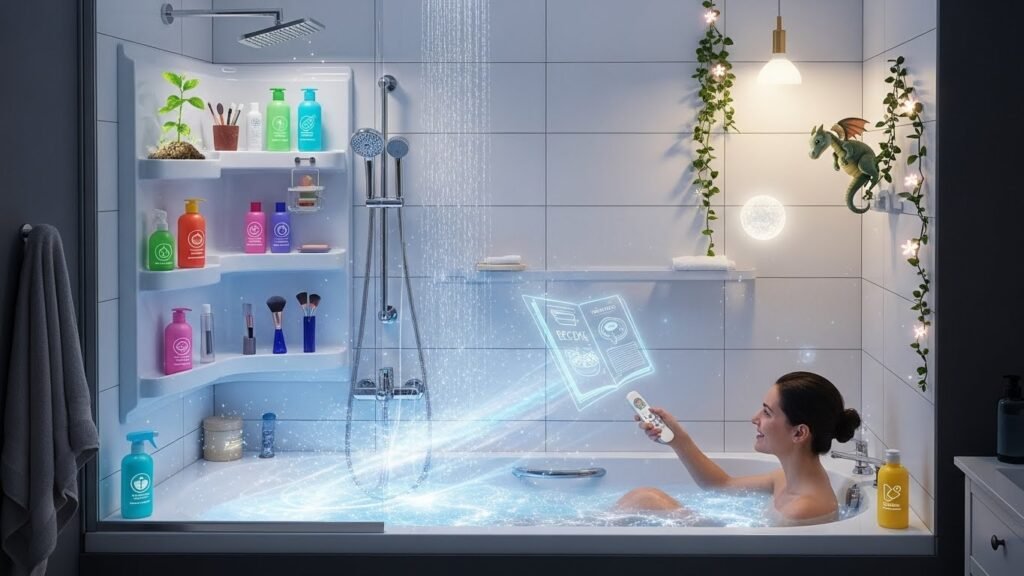
A shower-tub combo is a clever compromise in case there is not much space but you still need the option to take a bath. Imagine it as a Swiss Army knife to your bathroom, it is always handy and effective. I also worked on a vacation rental project whereby we had installed a 60-inch tub-shower unit with a handheld showerhead. It miraculously worked with those who have children. Advantages: Excellent sale or family. Limitations It requires more space than a standalone shower, and it cannot fit in the smallest spaces. Ethically, select low-flow faucets that will save on water, particularly in those regions where drought is eminent.
5. Free up the floor space with Wall-Mounted Fixtures.
Wall showers are also a revelation in small bathrooms such as those that display the pipes or recessed heads. I placed a showerhead and shower controls directly on the wall in one of my flips, and this made the floor slim enough to fit a vanity. It is a contemporary appearance that can be cleaned easily and less cluttered. Advantages: It improves the circulation of air, and increases the size of the room. Cons: It is a little complicated to install, provided that your walls are not firm, so hire an expert in case of doubts. I have watched this trend go out of control with the use of remote controls, however, keep in mind that not all homes require smart technology- sometimes simple works best.
6. Include Rainfall Showerhead in order to have a Spa-Like Escape.
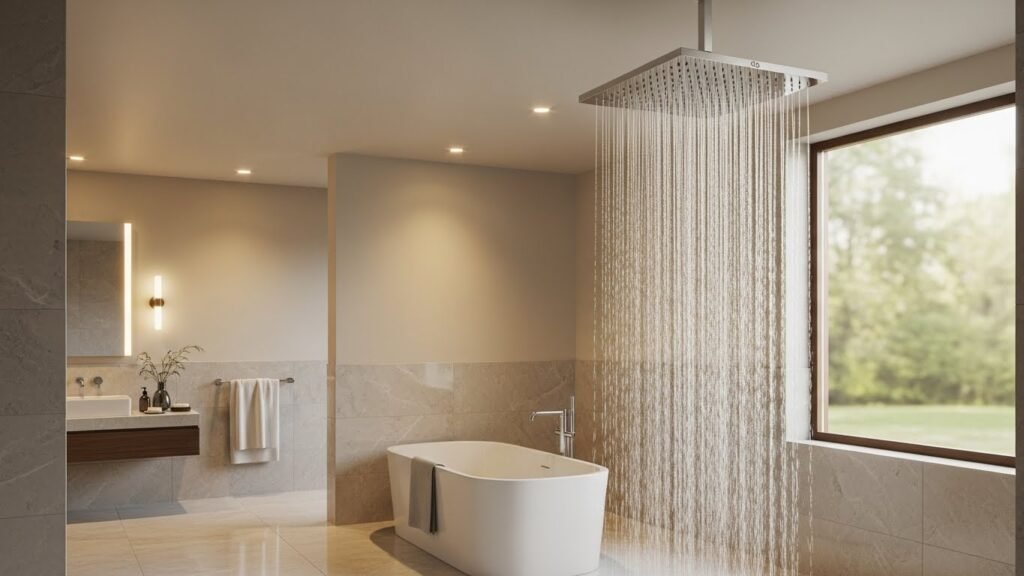
The rain showerheads are not very expensive and may seem lavish on small-sized baths; however, they may actually enhance the experience without overcrowding the space. Imagine the following scenario: In a 4×8-foot powder room of one of our clients, we fitted 8-inch rain head mounted on the ceiling and it transformed the ordinary showers into a small-scale retreat. The trick lies in matching it with a small enclosure so that the water spray does not go everywhere. Benefits: Enhances mood, and calming down, ideal on a hectic city resident. Disadvantages: They consume more water as compared to regular heads, and thus balance with those models that are eco-friendly by restricting water flow to 1.5 gallons each minute. In my observations, this concept is glowing with rentals that fast refreshes are important.
7. Add Lighting LED to provide Ambient Glow.
Lighting can turn a small bathroom into something big, and the addition of LEDs into the shower facility, is functional and stylish. Once, I created a system where the LED strips change color around the niche on the shower and made it blue because it is a calming color to use before bedtime. It is not overpowering and it works well even in dim areas. Advantages: Power efficient and can be customised. Disadvantages Wiring could involve an electrician which would add to the expense. Note: one should always make sure that the lights are waterproof and of standard to avoid any form of threat.
8. Apply Reflective Surfaces to Add the Effect of Depth.
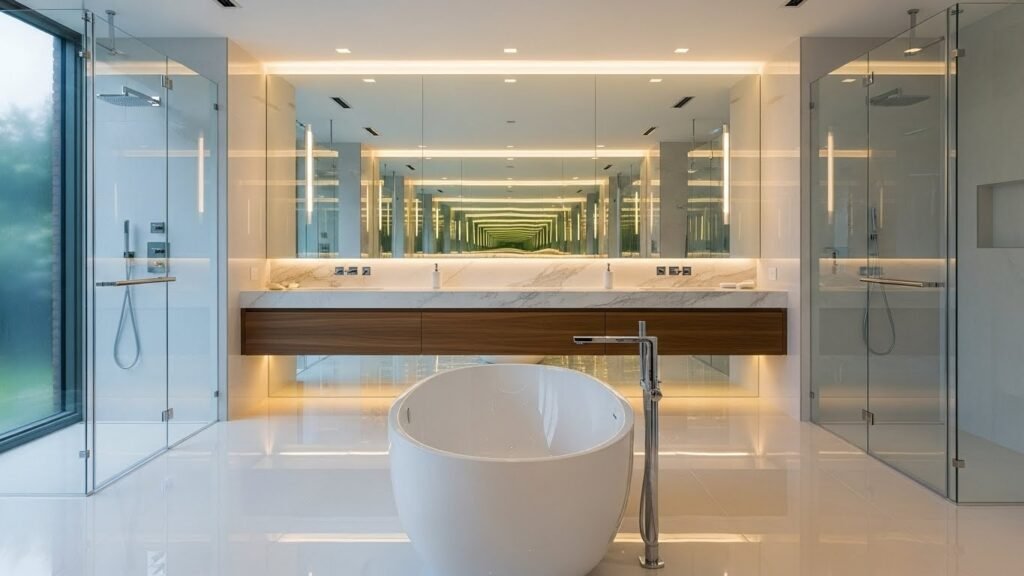
Mirrors do not necessarily serve vanities, but can be expanded to shower doors or walls and create an illusion of increased space. I have tested this at home by putting a mirrored panel to the shower door and the room appeared to be twice as wide. Advantages: It is cheap and readily accessible. Disadvantages: they are easily fogged up, use together with anti-fog treatments. Life tip: In a wet climate it is better to use tempered glass mirrors so they do not bend up with time.
9. Stick to the Neutral Colors to have a light airy feel.
The psychology of color is significant in such little areas, so the palette of whites, grays, and beige can make your shower room look less claustrophobic. In a beach house, I had the shower tiled using soft matte white color and it lightened up the entire bath. Benefits: Classical and universal. Disadvantages: It may seem dull with no accents, therefore, add some color using accessories. There are more shades of earthy neutrals such as sage green, which are grounded with the latest trends.
10. Accompany with Floating Vanity Open Flow.
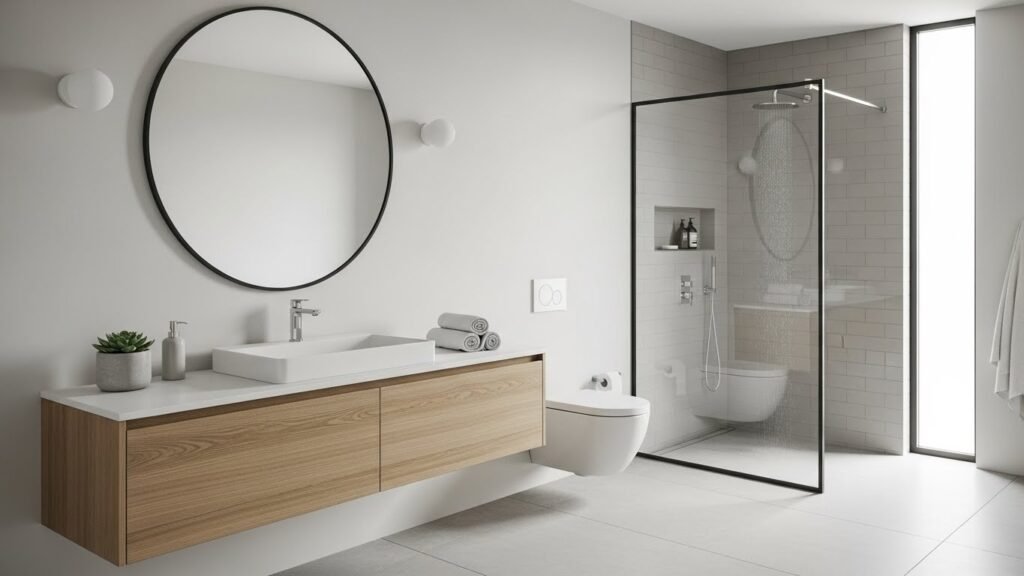
Floating vanities are removed off the floor and leave a feeling of openness to match up with a small shower. One of the urban apartments that I worked in placed a thin floating piece before the shower, which made the 5×5-foot room feel balanced. Advantages: Ease to wash and contemporary. Cons: They have weight limits and as such you cannot overload them. Middle opinion: Good in accessibility, since it is not crowded with the wheelchair.
11. Select Folding/Sliding Shower doors.
Replace the swinging doors with a space saving folding or sliding door that slides on track without occupying space in the room. I suggested a client to fit her bathroom, which is tight with sliding glass doors which was also a success because of the sliding nature of the doors. Advantages: Use of precious inches saved. Limitations: Tracks are prone to grime and therefore this is important to maintain. Ethically, use of recycled glass door to reduce environmental degradation.
12. Go Green with Low flow showerheads.
Nowadays, sustainability is something that can not be compromised and low-flow showerheads are a viable solution that reduce water consumption without the need to compromise on pressure. On my eco-centric renos, I have ensured that I install models that can produce an acceptable spray of only 1.75 gallons of water per minute. Advantages: Economical in bills and greener to the environment. Cons: Its flow is too weak according to some users and thus should be tested out. One of the lessons gained through gaining trust: Seek certified WaterSense, which has been tested independently.
13. Install Smart shower systems.
Intelligent technology is invading bathrooms, and technologies that allow you to regulate temperature and flow through apps are being introduced. I suggested an arrangement of a savvy smart client with a smart valve in their house, and it simplified the morning routine. Advantages: Good to fit time-constrained families. Disadvantages: Increased initial price and possible glitches- there is always the backup option. In my practice, it works best with bigger budgets, although the technology is becoming less expensive.
14. Optional Underfloor Heating to Cozy Comfort.
Under floor heating of the shower cost can be considered as a wasteful endeavor but it will provide warmth without consuming space. I used heated tiles on the project and in a cold climate, my clients applauded the luxury. Benefits: Increases the comfort during winter. Disadvantages: This is an invasive and expensive installation. A shortcoming: Not the best when used in historic houses because wiring is required.
15. Vertical Tiling with the purpose of making the room longer.
The vertical tile designs assist in attracting the eye towards the ceiling and make showers appear not so boxy. I applied it to a low ceiling bathroom, and I chose tall subway tiles, and it was a great success. Advantages: low cost style enhancement. Disadvantages: It can also be used to create an illusion of increased height and decreased width in the space; therefore, vertical and horizontal pieces need to be used to counterbalance it.
16. Add a Multi-Functional Shower Bench.
A constructed bench can be used as a seat, storage or even a place of shaving- ideal in the small showers. When renoing in an accessibility-oriented way, I included a fold-down bench and this made the space more accommodating. Advantages: flexible and easy to use. Limitations: Occupies some space on the walls, thus measure.
17. Use Frameless Glass to Have a Smooth Appearance.
Frameless glass showers provide uninterrupted clean view which opens up the room. It was a showcase of the contemporary loft conversion in my portfolio. Advantages: Fancy and simple to take care of. Disadvantages: It is more costly and less confidential. Ethical hint: Make sure that the glass is obtained in a responsible manner.
18. Introduction of Natural Elements such as Plants.
Plants that are not high-maintenance, such as succulents in a shower caddy, can be added to the space to make it gentler and enhance the air quality. I put this to test in one of my apartment rooms in a city, and it brought a cool, relaxing feel. Advantages: Enhances the mind. Cons: Humidity may also kill some plants and therefore be selective.
19. Design To Your Querks of Space.
Lastly, the solution may be an individualized shower made out of the peculiarities of your bathroom. We fit a curvy shower wall in a quacky L-shaped bath that we had renovated and it fitted perfectly.
To conclude, small bathrooms do not need to be restrictive, as with the appropriate shower concepts, one can make the space efficient, trendy and even fun. Based on my experience in the profession, the most successful designs are those that are practical with a personal touch with consideration to other factors such as budget, family needs, and environmental concern.
FAQs
Q: Which type of a shower is the most suitable in a rather small bathroom?
A: A walk-in or corner shower with transparent glass doors is the best as it makes the most of the space, and it makes things feel free.
Q: What can I do to make my small shower bathroom look bigger?
A: Clutter should be minimal, and mirrors, light colours and vertical should be used to produce an illusion of space.
Question: Do small bathrooms use low-flow showerheads?
A: They save water and money, and they do not compromise pressure but test a few of them to be sure they match your needs.
Question: How expensive is installation of a new shower in a small bathroom?
A: Cost of between 500 to 5,000 based on materials and workmanship; more basic designs such as alcove showers are in low cost.
Question: What do I take into consideration when I want to go into a small shower?
A: I would install grab bars, bench, and non-slips floors to ensure that it is safer particularly to families or other older users.