
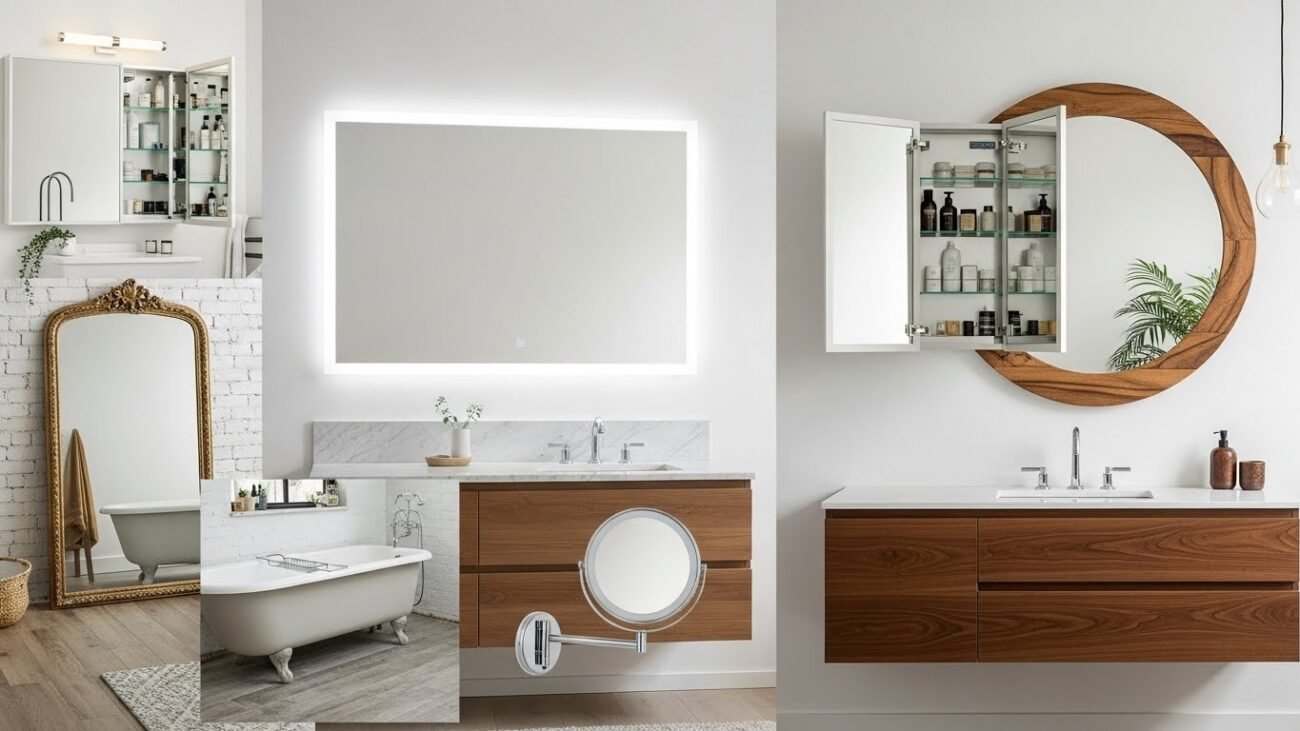
Bathroom Mirror Ideas, As someone who’s spent the better part of a decade helping folks spruce up their homes, I can tell you that a bathroom mirror isn’t just a functional piece—it’s the centerpiece that can make or break the room’s vibe. I’ve designed everything from cozy family bathrooms to sleek spa-like retreats, and I’ve seen firsthand how the right mirror can amplify light, create illusions of space, and even tie together the whole decor. Drawing from my own projects, client feedback, and a bit of digging into current trends, I’ve put together this list of 15 bathroom mirror ideas. Whether you’re renovating on a budget or going all out, these suggestions are based on real-world applications I’ve encountered. Let’s dive in, keeping in mind that mirrors can be a game-changer, but they also come with practical considerations like moisture resistance and maintenance.
1. The Classic Frameless Mirror for a Clean, Modern Look
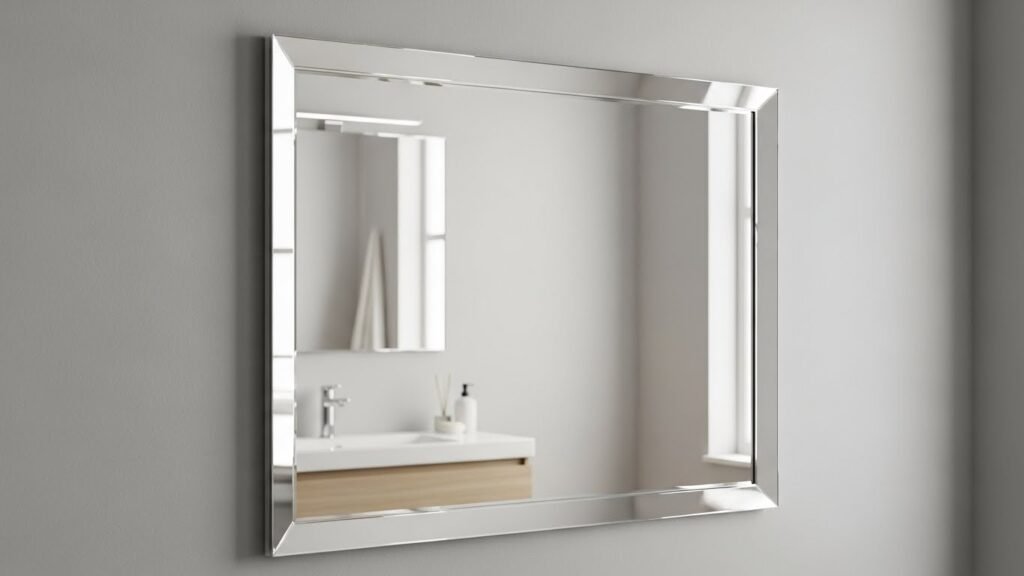
If you’re aiming for that minimalist aesthetic that’s all the rage these days, a frameless mirror is a no-brainer. I remember installing one in a small urban apartment bathroom a couple of years ago—it made the space feel twice as big by reflecting the natural light from a tiny window. These mirrors mount directly to the wall, giving off a seamless, floating effect. From my experience, they’re perfect for contemporary homes because they don’t overpower the room. But here’s a heads-up: without a frame, they can show every little smudge, so you’ll want to wipe them down regularly. Pros include their affordability and easy integration with other decor, while the main con is that they’re less forgiving in humid environments. If you’re on a budget, opt for a tempered glass version to ensure safety—it’s a small investment that pays off in durability.
2. Ornate Framed Mirrors for a Touch of Vintage Elegance
Not every bathroom needs to feel like a high-tech lab; sometimes, you want a bit of old-school charm. I’ve used ornate framed mirrors in historic home renovations, and they add instant character, especially in larger master baths. Think gold-leaf frames or intricate wood carvings that echo Victorian styles. In one project, pairing a gilded mirror with subway tiles created a luxurious, hotel-like feel without breaking the bank. These mirrors work well if your bathroom has traditional elements, like clawfoot tubs, but they might overwhelm a tiny powder room. A balanced viewpoint: they’re great for hiding wall imperfections, but dust can accumulate in the crevices, making cleaning a bit of a chore. Ethically, look for reclaimed or sustainably sourced frames to keep things eco-friendly, as I always advise clients.
3. LED-Lit Mirrors for Functional Glamour
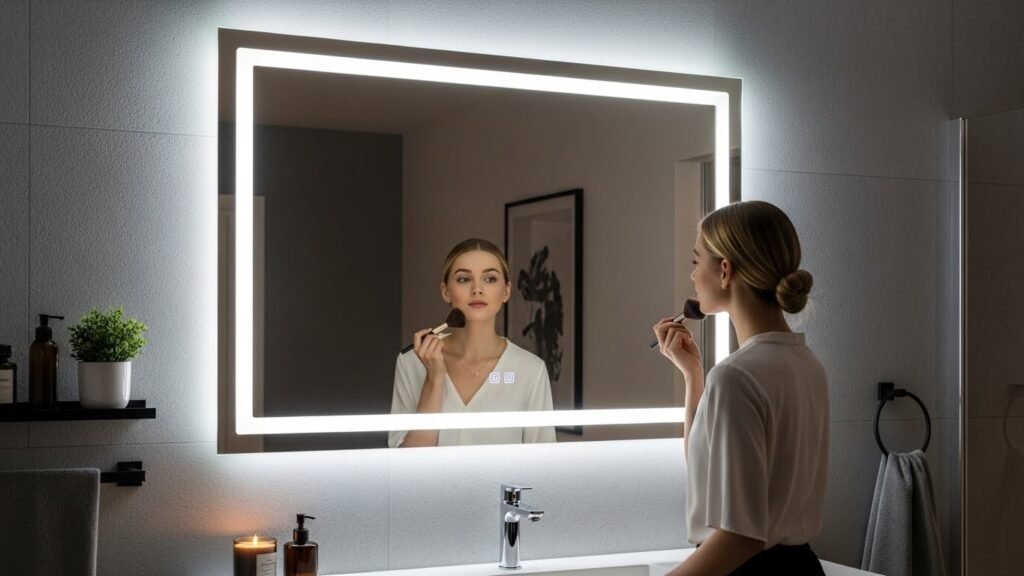
Lighting is everything in a bathroom, and LED-lit mirrors have become a staple in modern designs. I’ve incorporated them into several updates, like in a family home where the mirror’s built-in lights doubled as task lighting for morning routines. They often feature adjustable brightness and even anti-fog technology, which is a lifesaver in steamy showers. Compared to traditional options, these save energy and make applying makeup a breeze. However, not all are created equal—cheaper models might flicker or have uneven lighting, so I recommend brands with good warranties. From an analytical standpoint, they’re ideal for poorly lit spaces, but they do require electrical work, which could add to costs. In today’s energy-conscious world, opting for LED versions helps cut down on your carbon footprint.
4. Antique Mirrors for Timeless Appeal
If you’re into storytelling through decor, an antique mirror can bring history into your bathroom. I once sourced a 1920s piece for a client’s eclectic setup, and it became the focal point, reflecting warm tones from brass fixtures. These mirrors often have that coveted aged patina, giving them character, but they need careful handling to avoid damage. A real-life example: In a coastal home I worked on, an antique mirror added warmth to a otherwise neutral palette. Limitations include potential warping over time due to humidity, so placement is key—keep them away from direct shower spray. On the trust-building side, always verify authenticity or opt for reproductions if you’re unsure, as fakes can disappoint.
5. Oversized Mirrors to Maximize Small Spaces
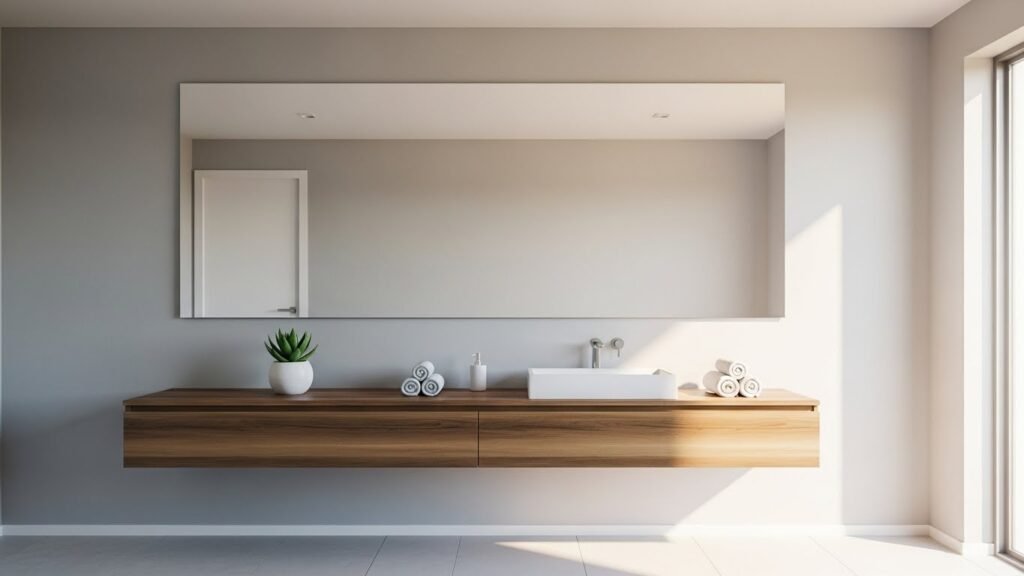
For those cramped bathrooms that feel like an afterthought, an oversized mirror can work wonders. I’ve used them in apartment renos to create a sense of openness, like in a 5×7 foot bath where a floor-to-ceiling mirror made it feel airy and bright. It’s all about optical illusions—reflecting light and extending visual lines. Practically, these are easy to find in big-box stores, but you’ll need sturdy mounting to handle the weight. A comparison: Think of it like a wide-angle lens on a camera; it expands your view but can also highlight clutter, so keep the space tidy. Balanced advice: Great for renters on a budget, but in humid areas, ensure it’s treated for moisture resistance.
6. Mirrored Cabinets for Storage with Style
Who says storage has to be boring? Mirrored cabinets combine utility and aesthetics, and I’ve installed plenty in family bathrooms to hide toiletries while keeping the look polished. In one case, it streamlined a cluttered guest bath, making it feel more spa-like. These often come with adjustable shelves and even built-in lighting, which is a win for organization. However, they can be pricier and might not suit ultra-minimalist designs. From my observations, they’re ethical choices if made from recycled materials, and they address the common issue of bathroom clutter without sacrificing style.
7. Round Mirrors for Softening Sharp Edges
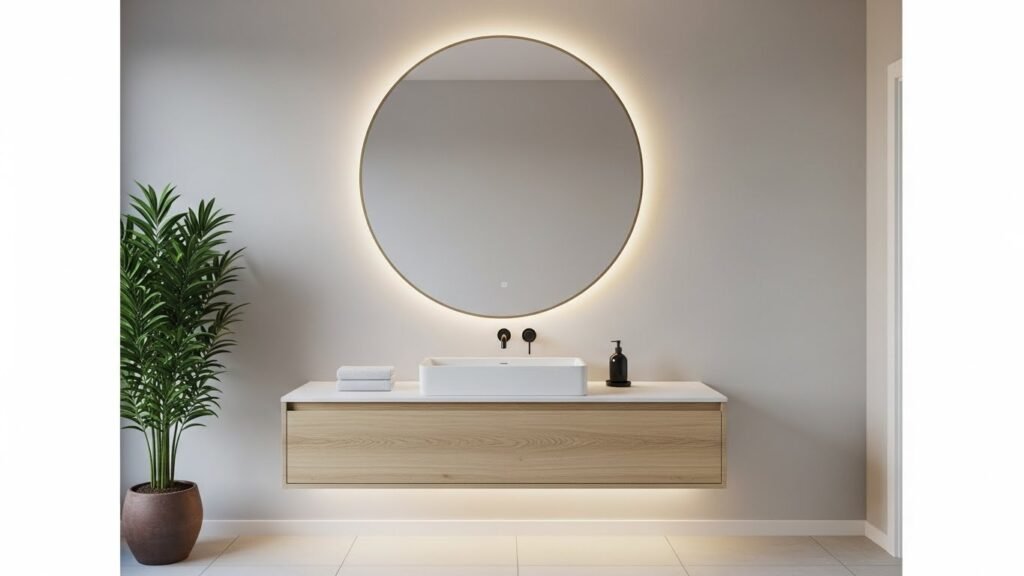
Round mirrors are having a moment, especially in 2024’s curved design trends. I used one in a modern farmhouse bath to add a softening element to all the straight lines from vanities and tiles. They’re versatile, working in both small and large spaces, and evoke a mid-century modern feel. A story from my portfolio: In a busy family’s powder room, a large round mirror reflected a window, making the room brighter and more inviting. Analytically, they distribute light more evenly than rectangular ones, but they might not be ideal for detailed grooming tasks. Keep in mind the limitations: Mounting can be trickier on uneven walls.
8. Geometric Mirrors for a Contemporary Edge
If your style leans bold, geometric mirrors—like hexagons or asymmetric shapes—can add that wow factor. I’ve experimented with these in urban lofts, where a cluster of hexagonal mirrors created a dynamic wall feature. They’re inspired by current art deco revivals and pair well with bold tiles or metallic accents. In practice, they’re great for injecting personality, but grouping them requires precise planning to avoid a cluttered look. A pro tip from my experience: Use them sparingly in smaller baths to prevent visual overload. Ethically, choose designs from brands that prioritize fair labor practices.
9. Wall-to-Wall Mirrors for Dramatic Effect
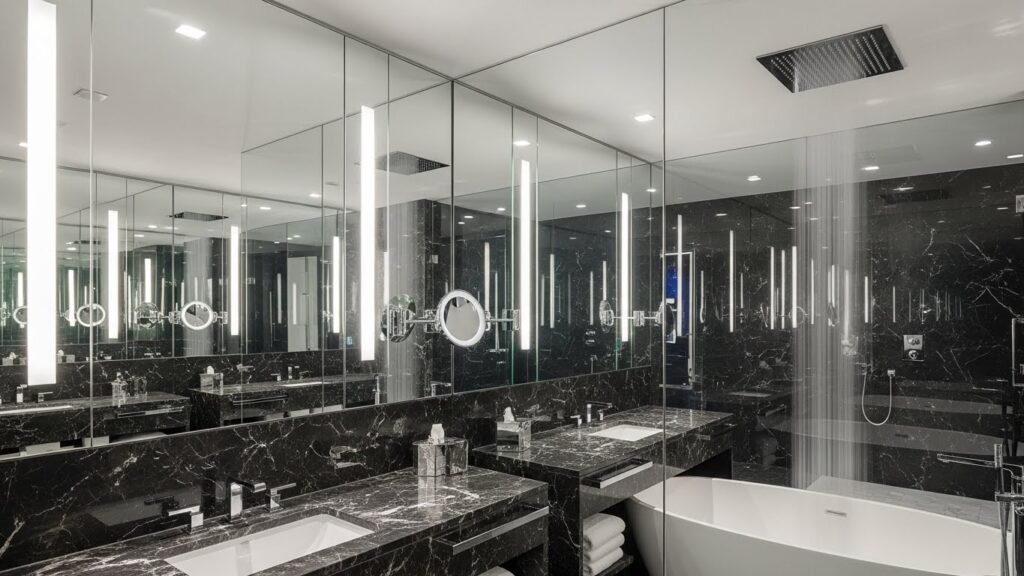
For a full-on glamorous vibe, wall-to-wall mirrors can transform a bathroom into a mini sanctuary. I designed one for a luxury hotel-inspired reno, and it made the space feel expansive and elegant. It’s like having your own personal infinity room, reflecting every detail. However, this idea has limitations—it’s not practical for every budget or layout, and cleaning becomes a bigger task. From a balanced perspective, while they enhance natural light, they can also amplify any flaws in the room’s design. In today’s context, with remote work blurring home boundaries, these mirrors add a resort-like escape.
10. Backlit Mirrors for Subtle Illumination
Backlit mirrors offer a softer alternative to overhead lights, and I’ve found them invaluable in evening routines. In a recent project, they provided just the right glow for a relaxing soak. Unlike front-lit options, they reduce shadows and create a calming ambiance. A comparison: It’s like the difference between stage lights and ambient ones—more flattering and less harsh. But be aware: Installation might involve rewiring, and they consume more energy than basic models. Trust me, they’re worth it for the mood they set, especially in wellness-focused homes.
11. Mirrors with Integrated Shelves for Multi-Functional Magic
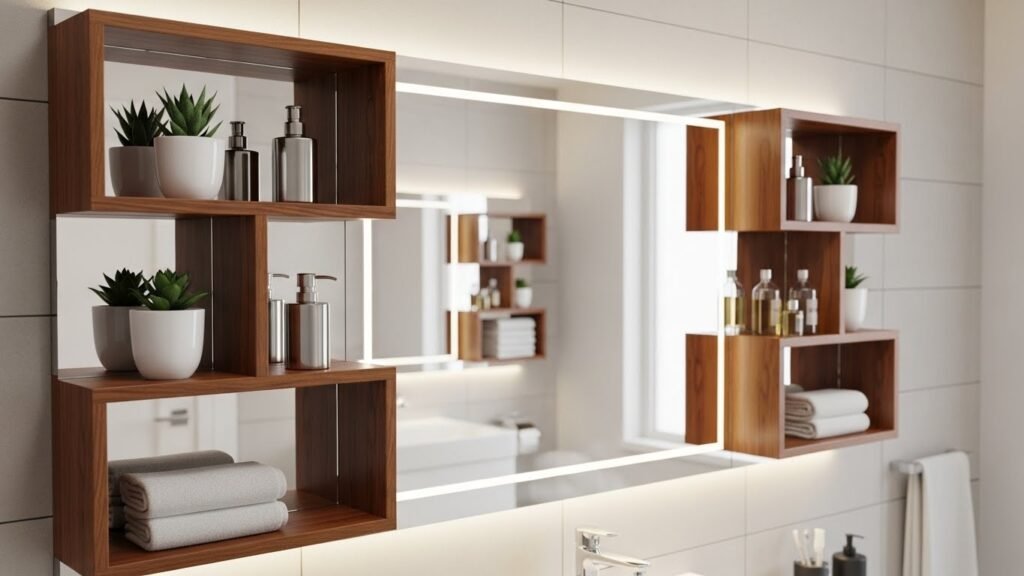
Space is precious, so mirrors with built-in shelves are a smart hack. I’ve incorporated them in compact baths to hold essentials like soaps and lotions, turning a simple mirror into a storage solution. In one efficiency apartment, it decluttered the counter while keeping things accessible. Analytically, they’re ideal for renters who can’t alter cabinets, but they might not appeal to those wanting a pristine look. Ethical consideration: Opt for ones with non-toxic materials to avoid any health risks in a moisture-heavy environment.
12. Custom Etched Mirrors for Personalized Touches
For a truly unique bathroom, custom etched mirrors let you add patterns or monograms. I once etched a family crest into a mirror for a client’s heritage-themed bath—it added a personal story without overwhelming the space. These are customizable through local artisans, making them a great way to support small businesses. However, they’re more expensive and require maintenance to preserve the etching. From my expertise, they’re perfect for powder rooms but less so in high-traffic areas where wear shows quickly.
13. Fog-Free Mirrors for Practical Everyday Use
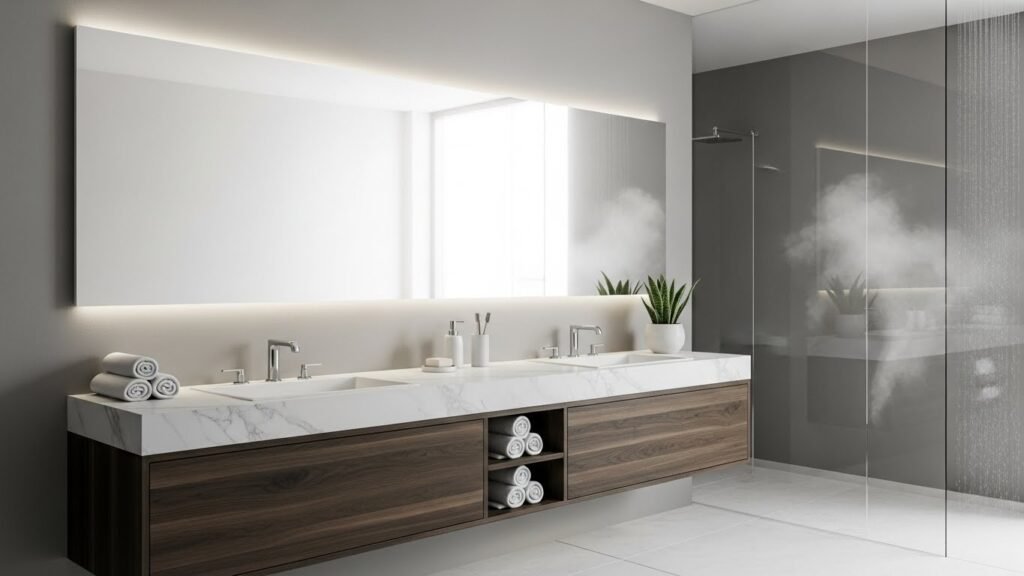
In steamy bathrooms, fog-free mirrors are a game-changer. I’ve recommended them for families with long showers, as they stay clear with special coatings. A real case: In a suburban home, it eliminated the frustration of wiping down after every use. Compared to regular mirrors, they’re more durable but come at a higher cost. Limitations include potential yellowing over time, so choose quality brands. In the current era of smart homes, they’re a subtle nod to convenience.
14. Smart Mirrors with Tech Integration
Smart mirrors are the future, blending mirrors with features like Bluetooth speakers or weather displays. I’ve installed a few in tech-savvy homes, and they add interactivity—imagine checking your schedule while brushing your teeth. But honestly, they can be overkill for some, and privacy is a concern with connected devices. From a balanced viewpoint, they’re innovative but require reliable Wi-Fi. Ethically, ensure they’re from reputable companies to protect data.
15. Eco-Friendly Mirrors for Sustainable Choices
Finally, with sustainability in mind, eco-friendly mirrors made from recycled glass or bamboo frames are gaining traction. In a green-focused project I handled, we used one to align with the home’s solar panels and low-VOC paints. They’re not just good for the planet; they hold up well in daily use. A caveat: They might cost more upfront, but the long-term benefits are clear. As an expert, I always weigh the environmental impact, and these options show how design can be responsible.
In wrapping this up, choosing a bathroom mirror is about more than aesthetics—it’s about how it fits your lifestyle, budget, and even your values. From my years in the field, I’ve seen these ideas breathe new life into spaces, but remember, trends evolve, so adapt them to your needs. Always consider professional installation for safety, and don’t forget to think about the bigger picture, like energy efficiency and accessibility.
FAQs
1. How do I choose the right size mirror for my bathroom?
Go for a mirror that’s about the same width as your vanity to keep things proportional. In small spaces, oversized options can make it feel larger.
2. Are expensive mirrors worth the investment?
It depends on your usage; high-quality ones last longer in humid environments, but budget-friendly versions can work if you maintain them well.
3. Can mirrors affect bathroom lighting?
Absolutely—they can amplify natural light and reduce the need for artificial sources, making your space brighter and more energy-efficient.
4. How often should I clean my bathroom mirror?
Aim for weekly wipes with a microfiber cloth and glass cleaner to prevent buildup, especially in high-humidity areas.
5. What if I have a rental and can’t install permanently?
Opt for adhesive-mounted mirrors or removable options to add style without damage, then take them with you when you move.
6. Are there mirrors suitable for kids’ bathrooms?
Yes, choose shatterproof or rounded-edge mirrors to ensure safety, and position them at a child-friendly height.
7. How do I incorporate mirrors into a dark bathroom?
Use reflective surfaces like metallic frames or position them opposite light sources to bounce light around and brighten the room.