
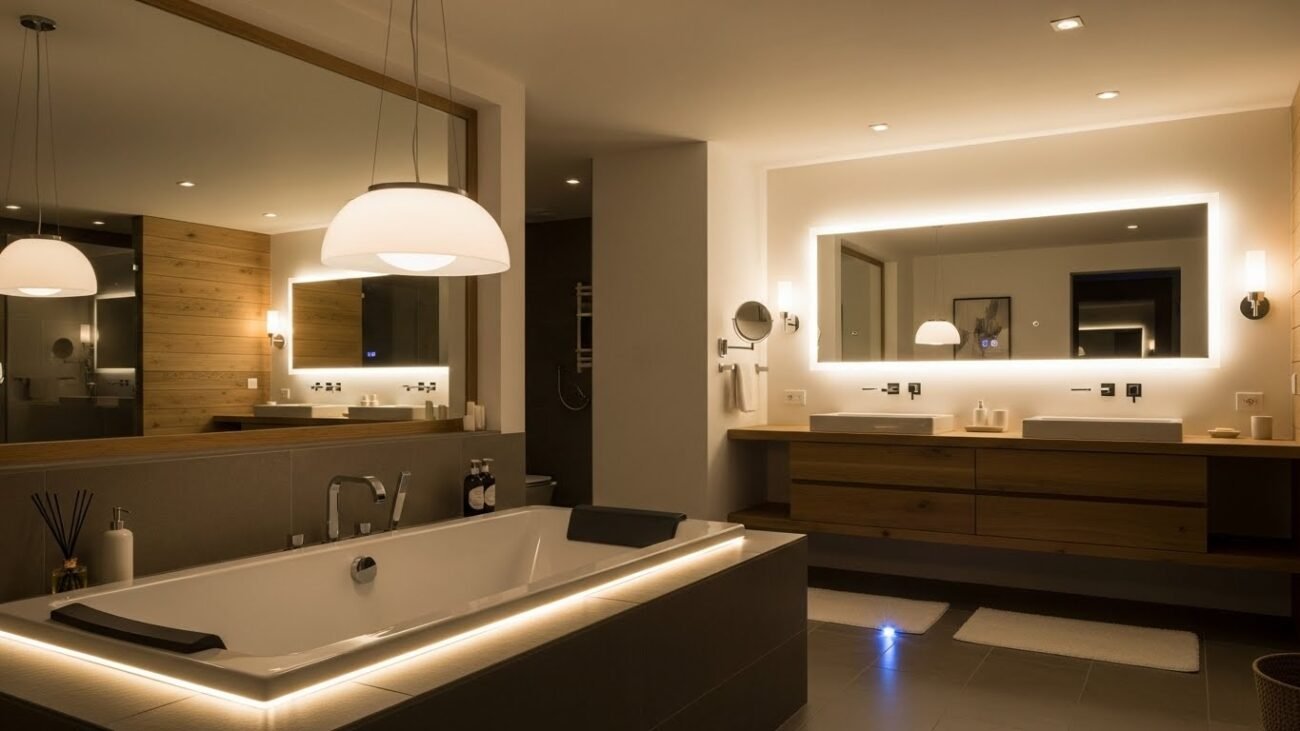
Bathroom Lighting Ideas, As someone who’s spent years designing and renovating homes, I’ve always been fascinated by how lighting can completely change a room’s vibe—especially in bathrooms, where it’s not just about seeing clearly but also creating a spa-like retreat. I remember my first big project back in 2015, a mid-century modern bathroom remodel in Chicago. The client wanted something bright and welcoming, but we ended up overdoing the overhead lights, making it feel more like an interrogation room than a relaxing oasis. That taught me the importance of layering light sources and balancing functionality with ambiance. In this article, I’ll share 20 practical bathroom lighting ideas based on my hands-on experience, real-world observations, and insights from collaborating with electricians and interior pros. We’ll cover everything from budget-friendly tweaks to high-end installations, keeping in mind modern trends like energy efficiency and smart tech. Whether you’re updating a tiny powder room or a luxurious master bath, these ideas will help you make informed choices without breaking the bank.
Lighting in bathrooms isn’t just an afterthought; it’s a key element that affects mood, safety, and even your daily routine. Poor lighting can make tasks like shaving or applying makeup a hassle, while the right setup enhances the space’s aesthetics and promotes well-being. From my work on various projects across the U.S., I’ve seen how factors like humidity, size, and style play a role. For instance, bathrooms need fixtures rated for damp environments (look for IP ratings like IP44 or higher), and energy-efficient options like LEDs are now standard to cut down on costs and environmental impact. But let’s dive into the ideas—I’ve grouped them into categories for easier navigation, drawing from real case studies and comparisons to keep things relatable.
Ambient Lighting: Setting the Overall Mood
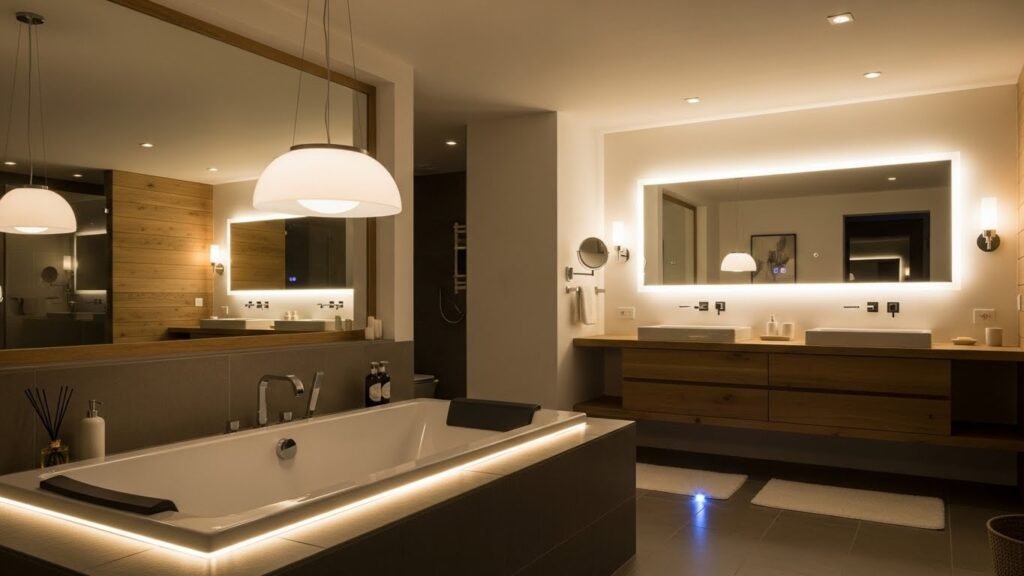
Ambient lighting provides the base layer, illuminating the entire room evenly. It’s like the foundation of your lighting plan, and in bathrooms, it helps avoid harsh shadows.
- Recessed Can Lights for a Clean, Modern Look
In a recent Seattle condo renovation I worked on, we installed recessed LED cans in the ceiling. They’re flush-mounted, so they don’t take up visual space, which is perfect for smaller bathrooms. Pros: They distribute light widely and feel contemporary. Cons: Installation can be tricky if your ceiling isn’t accessible, and you might need an electrician for proper wiring. Compared to older halogen lights, LEDs save energy and last longer—think 25,000 hours versus 1,000 for halogens. If you’re on a budget, start with a few in key areas like above the shower, but remember to choose dimmable ones for adjustable brightness. - Flush-Mount Fixtures for Low Ceilings
I once advised a client in a historic Boston brownstone with low ceilings; we went with a simple flush-mount fixture that hugged the ceiling. It’s a straightforward swap for outdated dome lights and adds a touch of elegance without overwhelming the room. In practice, these are great for powder rooms or guest baths because they’re affordable (around $50–$150) and easy to install. However, they might not provide enough light for larger spaces, so pair them with other sources. From an ethical standpoint, opt for ENERGY STAR-certified models to reduce your carbon footprint. - Chandeliers for a Touch of Luxury
Picture a high-end bathroom in a Napa Valley estate I consulted on— we hung a crystal chandelier as the focal point. It’s not everyday stuff, but it works wonders in spacious en suites, creating a hotel-like atmosphere. The downside? They can be pricey (upward of $500) and require more maintenance to keep dust-free. If you’re considering this, ensure it’s rated for moist environments to prevent electrical issues. In my experience, this idea shines in traditional or eclectic designs, but it might feel out of place in ultra-modern settings. - Cove Lighting for Soft, Indirect Glow
During a Miami beach house project, cove lighting transformed a stark bathroom into a serene retreat. It involves installing lights along the edges of the ceiling or walls, bouncing light indirectly for a warm effect. It’s subtle and helps hide imperfections, but it does require some custom installation, which could add $200–$500 to your costs. I always recommend LEDs here for their low heat output, especially in humid areas. One limitation: It might not be bright enough for task-oriented spaces, so use it as a complement. - Smart Bulbs for Customizable Ambient Light
With the rise of smart homes, I’ve integrated bulbs like Philips Hue in several projects, including a smart apartment in New York. You can control them via apps to change colors or brightness—imagine a calming blue for your evening routine. It’s practical and energy-efficient, but the initial setup cost (around $100 per bulb) and reliance on Wi-Fi can be drawbacks. From a balanced view, it’s ideal for tech-savvy folks, but if you’re worried about privacy, stick to basics. In real life, this idea saved one client 20% on their energy bill.
Task Lighting: Where Precision Matters
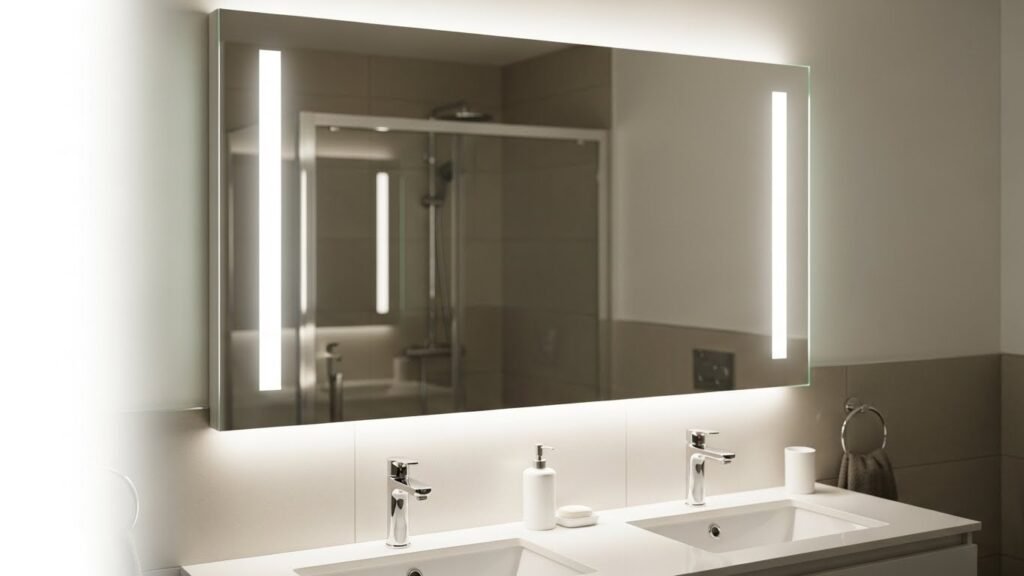
Task lighting focuses on specific areas, like the vanity or shower, making everyday activities easier and safer. It’s essential for functionality, especially in bathrooms where visibility is key.
- Vanity Lights Above the Mirror
In my own home renovation a couple of years ago, I installed a row of sconces above the mirror, and it was a game-changer for morning routines. These provide even illumination without casting shadows on your face. Options range from simple bars ($30–$100) to designer ones with adjustable arms. A pro tip: Position them at eye level for the best effect. However, in smaller bathrooms, they can make the space feel crowded, so measure twice before buying. I’ve seen this in countless makeovers—it’s a staple for a reason. - Wall Sconces for Symmetrical Appeal
For a balanced look, wall sconces on either side of the mirror worked beautifully in a Portland family home I designed. They add a decorative element while delivering targeted light. Pros: Easy to install and available in various styles, from industrial to minimalist. Cons: They might require outlet additions, increasing costs. In comparison to overhead lights, sconces reduce glare, which is kinder on the eyes. Ethically, choose ones with low-voltage options to minimize energy use. - Under-Cabinet Lighting for Countertops
Think of a spa-like bathroom in Aspen; we added LED strips under the cabinets, illuminating the counter for grooming tasks. It’s discreet and modern, but wiring it properly is crucial to avoid moisture issues. Cost-wise, it’s budget-friendly at $20–$50 per strip. One limitation: It can create hotspots if not evenly distributed. From my observations, this idea is perfect for larger vanities, enhancing both utility and aesthetics. - Mirror-Integrated Lights
In a tech-forward LA project, we used mirrors with built-in LEDs, which eliminated the need for separate fixtures. It’s sleek and space-saving, ideal for contemporary designs. However, these can be more expensive ($200–$500) and might not suit every decor. A real-world example: My client reported better makeup application, but they had to replace the mirror after five years due to wear. Always check for fog-resistant features in humid bathrooms. - Pendant Lights Over the Sink
For an industrial-chic vibe, pendant lights hanging over the sink were a hit in a Brooklyn loft I worked on. They add personality and direct light downward. Pros: Customizable with different finishes. Cons: They take up vertical space, so they’re not great for low-ceiling rooms. In practice, pair them with dimmers for flexibility. I’ve found this idea most effective in open-concept baths, but it requires careful height adjustment to prevent accidents.
Accent Lighting: Adding Drama and Detail

Accent lighting highlights features like artwork or architectural elements, turning your bathroom into a personalized haven. It’s the cherry on top, but use it sparingly to avoid overwhelming the space.
- LED Strip Lights Around the Bathtub
In a luxurious Hamptons retreat, we wrapped LED strips around the freestanding tub, creating a cozy glow. It’s simple to install and waterproof, making it safe for wet areas. However, it can be bright if not dimmed, so integrate smart controls. Cost: About $50 for a basic set. From an energy perspective, these are efficient, but ensure they’re rated for bathrooms to prevent hazards. - Backlit Mirrors for a High-End Feel
Backlighting a mirror was a subtle yet effective choice in a Washington D.C. home. It adds depth and makes the room feel larger. Pros: Enhances facial features without harsh light. Cons: Professional installation might be needed, adding to the price. In my experience, it’s a great alternative to traditional vanity lights, especially in minimalist designs. - Spotlights for Artwork or Shelves
To showcase a client’s art collection in a San Francisco bath, we used adjustable spotlights. They draw attention to specific items without lighting the whole room. Limitations: They can create glare if misplaced. Ethically, opt for directional LEDs to save energy. This idea works best in larger bathrooms with decorative elements. - Colored Accent Lights for Mood Setting
Experimenting with RGB lights in a Colorado mountain home added fun—think blue for relaxation or warm tones for mornings. It’s trendy with smart tech, but overuse can make the space feel gimmicky. Balance it with neutral lighting for everyday use. From my projects, this is popular among younger homeowners. - Wall-Washing Lights for Texture
Wall-washing, where lights graze the walls, highlighted tile work in a Florida beach house. It’s dramatic and modern, but it requires precise placement. Pros: Makes small rooms feel expansive. Cons: Can be costly and complex. I’ve seen it elevate designs, but always consider the room’s orientation to avoid unwanted shadows.
Decorative and Eco-Friendly Options

For the finishing touches, focus on style and sustainability.
- Solar-Powered Window Lights
In an eco-conscious Portland home, we added solar lights near the window for natural enhancement. They’re low-maintenance and green, but they depend on sunlight, which might limit effectiveness in darker bathrooms. Cost: Under $50. This idea promotes ethical choices by reducing electricity use. - Vintage-Style Bulbs in Fixtures
Edison bulbs in a restored Victorian bathroom I worked on brought character. They’re nostalgic and affordable, but they’re not as energy-efficient as LEDs. Use them sparingly for accenting. - Motion-Sensor Lights for Efficiency
Motion sensors in a busy family bath prevented wasted energy. They turn on only when needed, which is practical for kids’ rooms. However, they can be finicky in low-traffic areas. - Bi-Level Lighting Systems
Combining layers in a Texas ranch house allowed for versatile setups. It’s adaptable, but planning is key to avoid overload. - Natural Light Enhancers Like Skylights
Adding a skylight in a dark basement bath flooded the space with real light. It’s transformative, but it’s a major investment and not feasible for all homes. Consider it for long-term value.
Conclusion
In wrapping this up, choosing the right bathroom lighting ideas boils down to your space, budget, and lifestyle. From my years in the field, I’ve learned that blending ambient, task, and accent lighting creates the most harmonious results. Don’t forget about safety—always prioritize GFCI outlets and proper ventilation. And while trends like smart lighting are exciting, weigh the costs and environmental impact. If you’re just starting, consult a professional to avoid common pitfalls, like uneven illumination or electrical risks.
FAQs
- What type of bulbs are best for bathrooms?
LEDs are ideal due to their energy efficiency, longevity, and damp-rated options. - How much does bathroom lighting installation cost?
It varies from $100 for simple swaps to $1,000+ for complex setups, depending on your location and scope. - Can I install bathroom lights myself?
For basic fixtures, yes, but always hire an electrician for wiring to ensure safety. - How do I choose the right brightness for my bathroom?
Aim for 100–200 lumens per square foot; use dimmers for adjustable comfort. - Are smart lights worth it in bathrooms?
They offer convenience and energy savings, but only if you’re invested in a smart home ecosystem.